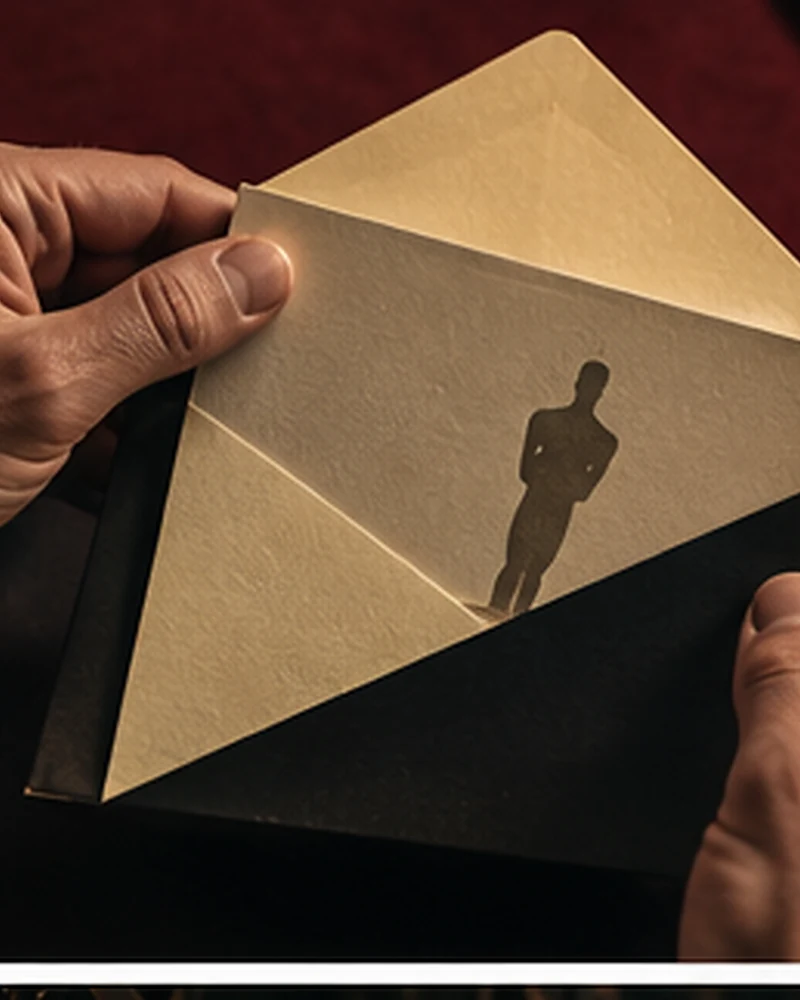
What the Academy rewards, and what outlasts the ceremony
For New Zealand readers exploring the Oscar-winning films of the twenty-first century, this desk follows the patterns beneath the awards conversation: history presented as spectacle, performances that transform a career, institutions under pressure and craft categories that shape memory. It connects criticism, scene analysis, reviews, plot summaries, character profiles and useful film metadata, with editorial views and factual records plainly marked apart.
Editorial imagery: the materials of awards history arranged as a study of craft and memory, not a film still.
Browse
Browse the themes desk
Combine a critical theme with genre and decade to reshape the visible pathways and reference record below. The count updates after every choice, so the current view remains clear before you continue reading.
Editorial view
Why the Academy keeps returning to history
Historical drama gives the Academy a way to talk about seriousness. A film set in a documented past can carry the weight of research, period design and moral consequence, and awards voters have repeatedly rewarded that combination. The pattern is not a rule: it is a recurring conversation about what a prestigious film is supposed to look like, and which stories are granted the scale of a Best Picture campaign.
Performance complicates that conversation. A historical film may win for its production values, but a performance can change what the film is about. Gladiator, The King’s Speech and Oppenheimer all depend on a central actor whose restraint or intensity gives the period material a body and a voice. The award recognises the performance, yet the performance also reveals how much the film needs a face to organise its argument.
Power is the third recurring pressure. Institutions — a senate, a studio, a newspaper, a family household, a research laboratory — give awarded films a structure for conflict. Characters do not simply face a villain; they negotiate rules, access and belonging. That is why theme-led reading can move between a historical epic and a social thriller without losing the thread: both ask who is admitted, who is watched and who pays for the arrangement.
From the ceremony outward, the Best Picture race can stand for a wider idea of cultural memory. Private craft sits beside public recognition; campaigns, reviews and acceptance speeches show how a film is described after it is made. That contrast leads into the pathways below, where themes overlap rather than compete. Each route is an editorial lens through which readers can follow history, performance, power and consequence across awarded films.
✦
Editorial view
Lead theme: Best Picture and the size of a story
Best Picture is often discussed as a measure of scale, but the category has also rewarded intimacy, procedure and formal restraint. What connects the winners is not size alone; it is the sense that a film has found the right shape for its subject. Oppenheimer uses a three-hour structure to hold a life and its public consequences, while Spotlight finds comparable weight in a newsroom and a sequence of difficult conversations.
Editorial imagery: the scale of a production is only one part of what an award recognises.
Spoiler warning
The optional reading below discusses the final act of Parasite (2019). It is separated so you can choose whether to encounter that plot detail now.
Editorial view
In its final movement, Parasite can be read as turning architecture into consequence. Spaces that earlier organised comedy — stairs, corridors, a hidden basement — become the material of violence and grief. The tension is not only about an immediate result; it comes from the changing sense of who has understood the house, who has been performing belonging, and who has been allowed to remain invisible. This is interpretation rather than a claim about exact camera method: the scene’s force lies in how spatial design makes every response feel consequential.
Reading routes
Theme pathways
Choose a critical route rather than a ranking. These compact pathways connect recurring ideas in Oscar-winning cinema with the site’s reviews, story features and film-guide material.
01Story feature · Reading time shown on destination
History as spectacle
Period detail, scale and moral seriousness can make a film feel like an official account of the past. This route considers how awarded historical dramas turn research into narrative, and what their images ask a viewer to remember.
An acting award can fix a performer in the public imagination, but the performance itself is a set of choices. Follow the roles that use restraint, transformation and physical detail to become the film’s centre of gravity.
Films about witness, investigation and historical wrongs often carry a public obligation. This criticism and plot-context route keeps major revelations labelled while asking what a film asks of the viewer after the credits.
An institution can organise surveillance, hierarchy and belonging into a single dramatic system. This route considers who controls the room, who is admitted to it, and how access becomes a measure of power.
The Academy’s categories have changed as international films have moved into the centre of the awards conversation. This route follows subtitles, translation and the politics of recognition without treating a single win as the end of the story.
Editing, sound, cinematography and score are often discussed only during awards season, yet they shape what an audience remembers. This route follows the below-the-line work that gives an awarded film its texture.
No editorial pathways match this combination. Reset the filters or choose a broader theme, genre or decade.
Fact file
Film index: verified reference points
This register records basic release, production and Academy Award metadata. Its theme tags are Film Storyboard editorial classifications, not official genre or production categories, and are intended as starting points rather than rankings.
Release information, credits, runtimes, countries, genre records and Academy Award results are presented as factual metadata. We mark those entries as FACT FILE so readers can tell basic production and awards information from an argument about what a film means.
02Editorial view
Interpretations stay visible
Arguments about theme, character motivation, suspense and visual storytelling are editorial views. They are not hidden inside factual prose, and readers may reasonably draw different conclusions from the same scene, performance or narrative turn.
03Spoiler choice
Spoilers require a choice
Plot summaries and close scene readings receive clear notice before meaningful revelations. Where disclosure matters, a reader-controlled button keeps the detail separate; the label carries the warning in words, not colour alone.
Follow essays on narrative construction, character pressure and memorable moments in awarded films, with spoiler labels to check before opening individual analyses.
Find credits, runtime, country, award totals and genre context in a format that keeps factual records visibly distinct from Film Storyboard’s editorial tags.
Editorial imagery: the working materials of film study and criticism.
Index cue
Continue the search
Keep a selected theme active as you move into the Film Guide, or return to the filter desk for another route. Filters can be reset whenever you want the complete index again.